Art

The Brinton Museum

The Brinton Museum is built into a hillside outside Sheridan, Wyoming, and overlooks the Bighorn Mountains. The entrance feels like a portal to some interior place—or maybe an extension of that interior place as it tries to emerge from the earth.

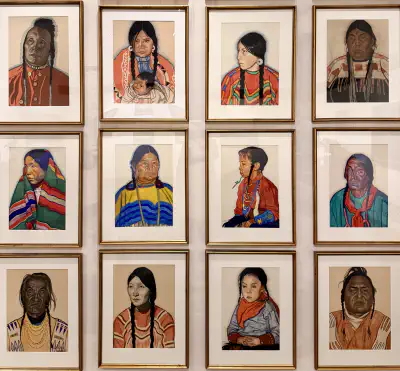
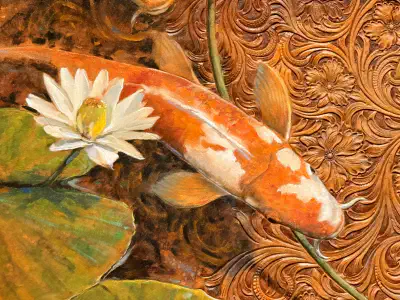
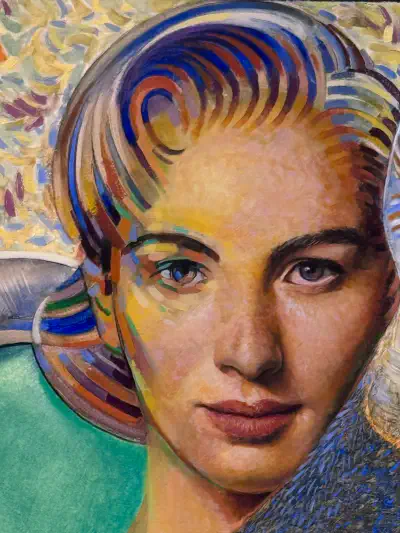
Inside is a striking collection of indigenous and Western art, including: recollections and paintings of The Battle of the Greasy Grass / Little Bighorn; Winold Reiss’s Montana Blackfeet portraits, each with their own story to tell; and Jim Jackson’s paintings on carved leather.

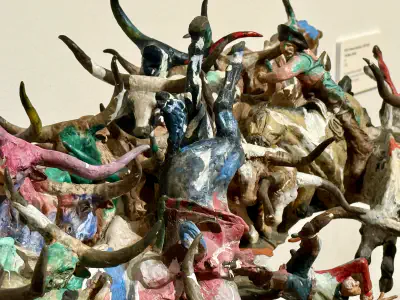
A sculpture of cattle and cowboys, painted with bright colors.
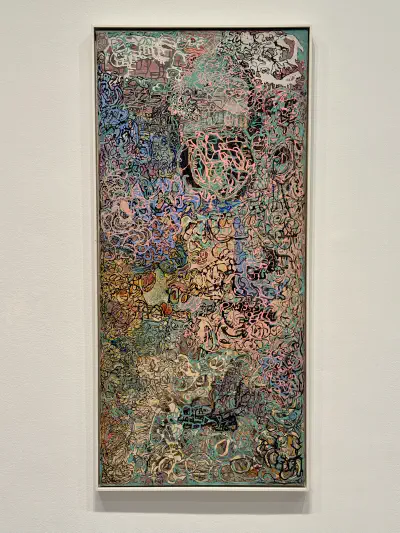
Detail from “Cosmos,” Harry Jackson, 1996
Twelve framed portraits of Blackfeet tribe members
Blackfeet portraits, Winold Reiss, 1920
A koi fish swims beneath a lily pad.
Detail from “Koi Theater,” Jim Jackson, 2023
A woman with short, wavy hair faces the viewer.
Detail from “Categorical Imperative,” Jim Jackson, 1985

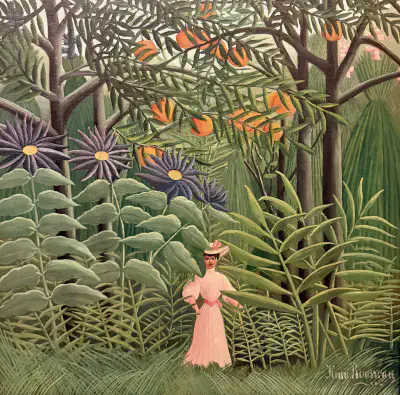
Woman Walking in an Exotic Forest by Henri Rousseau

Detail from “Woman Walking in an Exotic Forest”

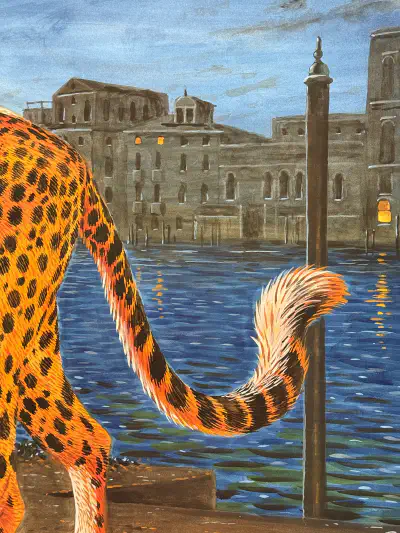
Tutto by Walter Ford

A cheetah’s tail is juxtaposed against a backdrop of a canal in Venice
Detail from “Tutto fu ambito e tutto fu tentato”

Tutto is [Ford’s] first body of work to focus on a single individual: the eccentric Milanese heiress Luisa Casati (1881–1957). Depicting the exotic animals that she kept, Ford portrays her years in Venice shortly before World War I.

Known as La Marchesa, Casati was one of Europe’s wealthiest women and is legendary for her extravagant pursuit of aesthetic extremes and social recognition. Startled onlookers describe how she wore snakes as necklaces, walked with a pair of cheetahs in Venice’s piazzas, and attended an opera clad in a headdress of peacock feathers that were stained with the blood of a freshly killed chicken.

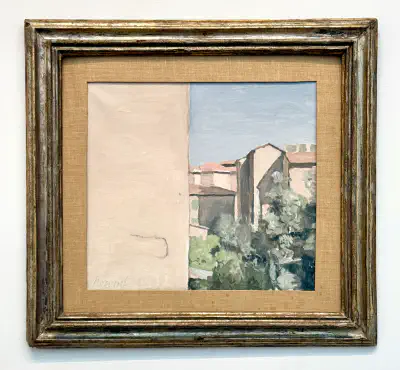
Cortile di via Fondazza by Giorgio Morandi

Cortile di via Fondazza by Giorgio Morandi

This painting shows the view through the window of Morandi’s now-renowned studio in Bologna, a sacred place for his artistic production. Morandi’s growing inclination toward abstraction is evidenced in this 1954 work by its distinct dividing line: the imposing presence of a light-colored wall, which occupies nearly half of the left side of the painting. The wall serves only to animate the right side of the work.

A brilliant constraint and framing.