“For my friend Fong,” he says, and begins singing John Denver. If you didn’t know it already, now you do: old dudes from rural Taiwan are comfortable with their karaoke and when they do karaoke for some reason they love no one like they love John Denver.
Maybe it’s the dream of the open highway. The romantic myth of the West. A reminder that these funny little Orientals have actually been Americans longer than you have. Know something about this country that you haven’t yet figured out. If you don’t believe it, go down to your local karaoke bar on a busy night. Wait until the third hour, when the drunk frat boys and gastropub waitresses with headshots are all done with Backstreet Boys and Alicia Keys and locate the slightly older Asian businessman standing patiently in line for his turn, his face warmly rouged on Crown or Japanese lager, and when he steps up and starts slaying “Country Roads,” try not to laugh, or wink knowingly or clap a little too hard, because by the time he gets to “West Virginia, mountain mama,” you’re going to be singing along, and by the time he’s done, you might understand why a seventy-seven-year-old guy from a tiny island in the Taiwan Strait who’s been in a foreign country for two-thirds of his life can nail a song, note perfect, about wanting to go home.
Intermezzo by Sally Rooney
Tutto by Walter Ford
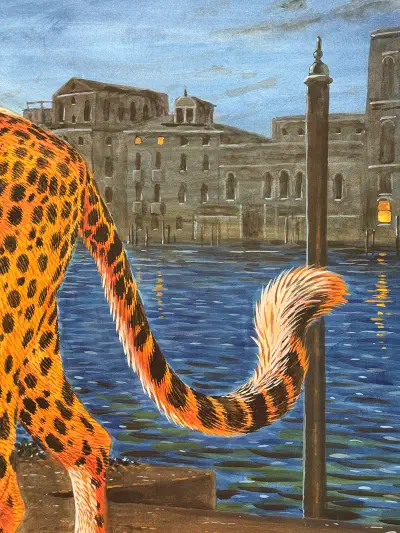
Tutto is [Ford’s] first body of work to focus on a single individual: the eccentric Milanese heiress Luisa Casati (1881–1957). Depicting the exotic animals that she kept, Ford portrays her years in Venice shortly before World War I.
Known as La Marchesa, Casati was one of Europe’s wealthiest women and is legendary for her extravagant pursuit of aesthetic extremes and social recognition. Startled onlookers describe how she wore snakes as necklaces, walked with a pair of cheetahs in Venice’s piazzas, and attended an opera clad in a headdress of peacock feathers that were stained with the blood of a freshly killed chicken.
Two Americas, one bank branch, and $50,000 cash bitsaboutmoney.com
Maybe Happy Ending
The show was plenty enjoyable with memorable tunes, but for me it fell a bit short of the lavish praise it’s been receiving. While watching I found myself repeatedly thinking about Kazuo Ishiguro’s Klara and the Sun and missing that novel’s more interesting explorations of similar topics. The show also slows down through its second half and overexplains its ending.
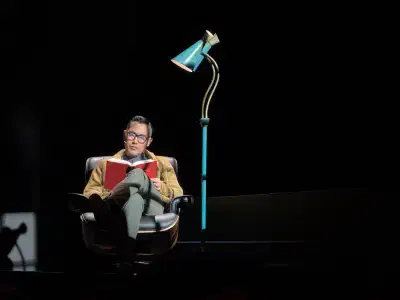
The set design is Ring-esque both in terms of its playfulness and creativity and how it ultimately distracts and inserts itself as an unwanted character. It also results in the most punitive sightlines of any show I’ve seen. If you aren’t center orchestra or mezzanine, you will feel excluded from the show at times. The unnecessarily large proscenium frame and hard right angles of the rooms are the main culprits; I don’t understand why they didn’t cheat the angles outwards towards the wings.
Things Fall Apart by Chinua Achebe
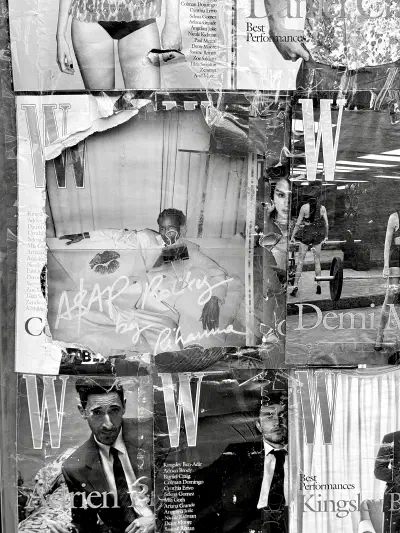
W hole
Cortile di via Fondazza by Giorgio Morandi
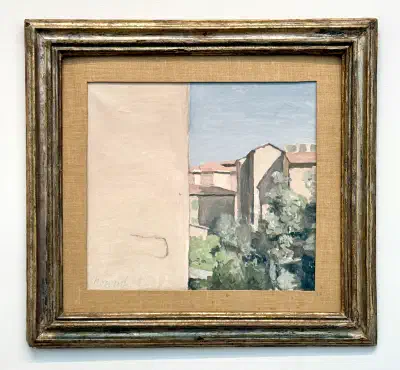
This painting shows the view through the window of Morandi’s now-renowned studio in Bologna, a sacred place for his artistic production. Morandi’s growing inclination toward abstraction is evidenced in this 1954 work by its distinct dividing line: the imposing presence of a light-colored wall, which occupies nearly half of the left side of the painting. The wall serves only to animate the right side of the work.
A brilliant constraint and framing.
Dancers, U Bein Bridge

At the west portal of the U Bein Bridge.
The hardest working font in Manhattan
It was the first font, and perhaps originally the only font that came with the engraver, so it suffered a nameless fate, familiar later to many bespoke bitmap fonts adorning the screens of early computers.
The Order of Time by Carlo Rovelli
Our “present” does not extend throughout the universe. It is like a bubble around us.
How far does this bubble extend? It depends on the precision with which we determine time. If by nanoseconds, the present is defined only over a few meters; if by milliseconds, it is defined over thousands of kilometers. As humans, we distinguish tenths of a second only with great difficulty; we can easily consider our entire planet to be like a single bubble where we can speak of the present as if it were an instant shared by us all.
Nickel Boys
I’d Rather Go Blind by Etta James

So Late in the Day by Claire Keegan
‘Is there anything you would not give me?’ she had once asked.
‘Nothing,’ he had said, instantly. ‘There is nothing.’
For some reason, she had kept looking at him, and had waited.
‘Well,’ he had said, clearing his throat. ‘Maybe the land. I wouldn’t want to give you the land.’
Oh, Mary!
Have you ever had a great day? The kind of day so great it imbues every single sad or boring or terrible day that came before it with deep meaning because from where you stand on this great day, all those days were secretly leading to this one?
Somebody Somewhere
A good friend recommended this series and it did not disappoint. Raising a teeny ’tini to one of the most sincere and moving shows I’ve watched in a long time.
Smithereens
Slung low, charmingly frantic, seaweed everywhere (in a good way).

Conclave
Balthazar
“22 Hours in Balthazar,” New York Times:
Alvino is flying, his left hand’s fingers imperceptibly rotating the potato between upward strokes of the peeler, blindly flipping the naked spuds over his shoulder into the tub. I pull up my phone’s stopwatch to time him for a minute, treating each potato as a lap: his slowest is 10.7 seconds, his quickest 6.4. Alvino, a shy man from the Dominican Republic, has been doing this same job for 15 years. “Like anything else, it was difficult at first,” he says, but he caught his rhythm after a couple of months. Peralta has been at it for 14 years.
Nora Ephron, I Remember Nothing:
My idea of a perfect night is a good play and dinner at Orso.
Nora Ephron, When Harry Met Sally…:
Restaurants are to people in the eighties what theater was to people in the sixties.
Ephron’s last line here (delivered through two characters) is pitch-perfect irony. You can visit a Parisian brasserie in many cities that are not Paris. Is that theater? No: a play is theater; a french fry is just a potato. But on their best days, restaurants like Balthazar deliver a tiny portion of theater’s magic.